ASO vs SEO: What’s the Difference and Which One Do You Need in 2026?
Every business today wants to be found online. But where exactly should people find you?
If you have a website, you want to show up on Google. If you have an app, you want to show up on the App Store or Google Play. This is where the confusion starts. Many business owners hear terms like “optimization” and “keywords” and assume all digital marketing is the same.
It isn’t.
Understanding ASO vs SEO is critical for your growth strategy in 2026. While both aim to get more eyes on your product, they play by very different rules. Picking the wrong one—or ignoring the right one—can mean missing out on thousands of potential customers.
In this guide, we will break down the differences simply. You will learn what makes each unique, how they work, and, most importantly, which one your specific business needs right now.
What Is SEO?
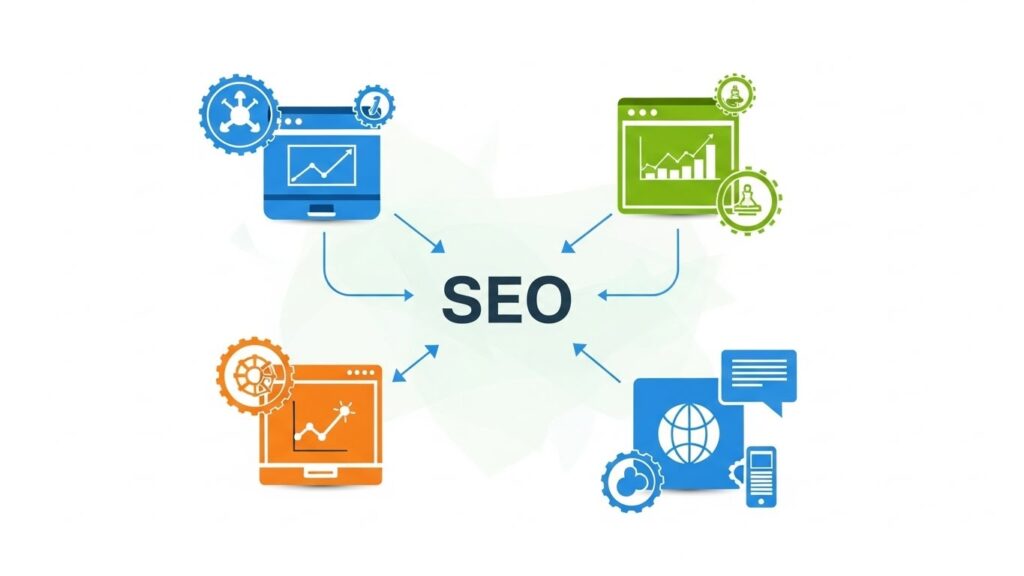
SEO stands for Search Engine Optimization. It is the process of improving your website so that it ranks higher on search engines like Google, Bing, or Yahoo.
When you type a question into Google, like “best pizza near me” or “how to fix a leaky faucet,” the search engine shows you a list of results. SEO is the work businesses do to make sure their website appears at the top of that list.
How SEO Works
Search engines use automated bots called “crawlers” to read websites. They look at the text, images, and code to understand what the site is about. Then, they index this information in a giant library.
When a user searches for something, the search engine’s algorithm scans its library to find the best match. It wants to give the user the most helpful, relevant, and trustworthy answer.
Key Ranking Factors
Google uses over 200 factors to decide which website ranks first. Here are a few of the most important ones:
- Content Quality: Is the information helpful and accurate?
- Keywords: Does the page use the words people are searching for?
- Page Speed: Does the website load quickly?
- Mobile-Friendliness: Does the site look good on a phone?
- Backlinks: Do other trustworthy websites link to your site?
Types of SEO
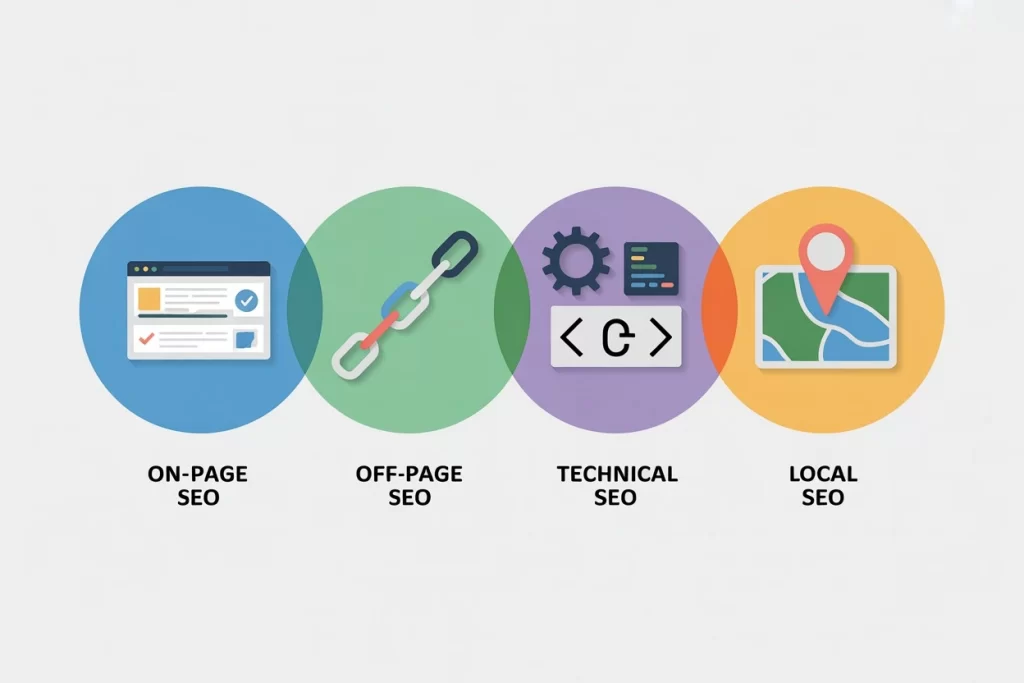
SEO isn’t just one thing. It includes several different areas:
- On-Page SEO: Optimizing the content on your website (blogs, product pages).
- Off-Page SEO: Building authority outside your site, mainly through backlinks.
- Technical SEO: Fixing backend issues like site speed and code structure.
- Local SEO: optimizing for location-based searches (like Google Maps).
What Is ASO?
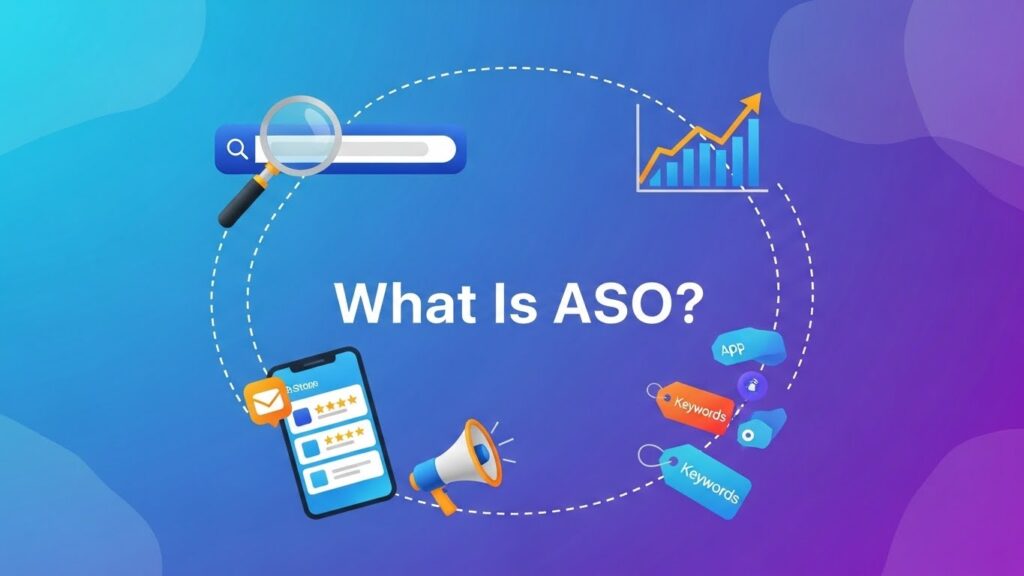
ASO stands for App Store Optimization. You can think of it as SEO for mobile apps.
ASO is the process of improving your app’s visibility within an app store, such as the Apple App Store (for iOS) or Google Play Store (for Android). The goal is to rank higher in search results and top charts so that more people download your app.
How App Store Optimization Works
Just like Google, app stores have algorithms. When a user searches for “fitness tracker” or “puzzle game,” the app store decides which apps to show first.
ASO focuses on two main goals:
- Visibility: Getting people to find your app.
- Conversion: Convincing people to actually download it once they find it.
Key ASO Ranking Factors
While similar to SEO, ASO has its own unique factors:
- App Title & Subtitle: Including relevant keywords here is crucial.
- Downloads: The more people download your app, the higher it ranks.
- Ratings & Reviews: High star ratings and positive comments boost visibility.
- Uninstall Rate: If people delete your app quickly, it hurts your ranking.
- Visuals: Your app icon and screenshots don’t affect ranking directly, but they heavily influence whether someone clicks “download.”
App Store vs Google Play Differences
It is important to know that Apple and Google do things differently.
- Apple App Store: Very strict on keyword fields. You have a specific hidden field to type in your keywords.
- Google Play Store: Works more like Google search. It reads your app description to find keywords, so you need to write a good description.
ASO vs SEO – Key Differences Explained
When comparing ASO vs SEO, it helps to look at the specific mechanics of how they work. While both deal with keywords and algorithms, the “how” and “why” are quite different.
Platforms (Search Engines vs App Stores)
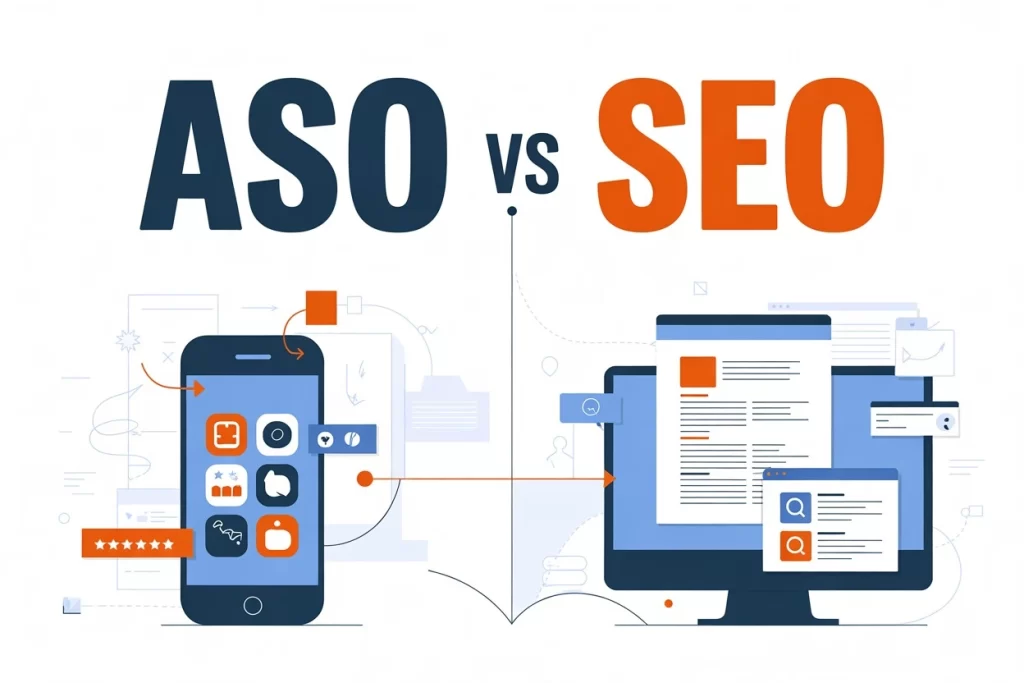
SEO is for the open web. It targets search engines like Google, which are used for finding information, answers, products, and services. The competition is massive because there are over a billion websites.
ASO is strictly for closed ecosystems—the app stores. It targets mobile users who are specifically looking for software to install on their phones.
Keywords & Search Intent
In SEO, people often type long, specific questions (called long-tail keywords). For example, someone might search, “how to bake a gluten-free chocolate cake.” They are looking for information.
In ASO, search queries are usually short and specific to functionality. Users type things like “calculator,” “travel booking,” or specific brand names like “Uber.” They are looking for a tool to perform a task.
Ranking Factors
SEO relies heavily on “authority.” This means Google trusts your site because other sites link to it and you have lots of high-quality content. It takes a long time to build this trust.
ASO relies heavily on “volume and velocity.” The app stores care about how many people are downloading your app right now and how good their experience is (ratings). A sudden spike in downloads can shoot an app to the top of the charts very quickly.
Content vs App Metadata
SEO requires constant content creation. You need to write blogs, update service pages, and keep your site fresh to rank well. Content is king in SEO.
ASO focuses on metadata. You have limited space (a title, a subtitle, a short description). You don’t need to write a new blog post every week for your app store listing. instead, you tweak and refine your existing text and images to get better conversion rates.
Reviews, Ratings & User Signals
Reviews matter for both, but they are critical for ASO. A 2-star rating on an app store will almost guarantee your app fails. Users see the stars immediately before they download.
For SEO, reviews matter mostly for Local SEO (Google Maps). For a regular blog or website, users rarely look at reviews before clicking a link.
Time to See Results
SEO is a marathon. It typically takes 3 to 6 months (or longer) to see significant results for a new website. You are building a reputation.
ASO can be faster. If you optimize your keywords and run a paid ad campaign to drive downloads, you can see a ranking boost in a few weeks. However, maintaining that rank is hard without constant downloads.
ASO vs SEO – Which One Is Right for Your Business?
This is the big question. Should you invest in ranking a website or an app? The answer depends entirely on your business model.
Websites (Content & Info Products)
If you sell information, consulting, or have a blog, you need SEO. People go to Google to find answers. They do not go to the App Store to read a blog post.
Mobile Apps (Games & Utilities)
If your product is a mobile game, a fitness tracker, or a photo editor that lives on a phone, you need ASO. Your primary goal is installs. While a website can help support your app, the app store is where the action happens.
Local Service Businesses
If you are a plumber, dentist, lawyer, or run a restaurant, you need SEO (specifically Local SEO). When someone has a toothache, they Google “dentist near me.” They do not search the App Store for a dentist app.
eCommerce & SaaS
This is where it gets tricky.
- eCommerce: Start with SEO. You want your products to show up in Google Shopping and search results. Once you have a loyal customer base, you might build an app and use ASO to get repeat buyers.
- SaaS (Software as a Service): Usually starts with SEO to capture leads on a desktop. However, if your software has a strong mobile component (like a project management tool), you will eventually need ASO too.
Can ASO and SEO Work Together?
Absolutely. In fact, the most successful mobile apps use both strategies.
Cross-channel Visibility
Imagine a user searches Google for “best budget travel app.” If you have good SEO, your website (or a review site mentioning you) appears. They read about you and click a link to the App Store.
Once they land on the App Store, your ASO takes over. Your optimized screenshots and high rating convince them to hit “Download.”
Brand Authority
Having a website that ranks well on Google gives your app legitimacy. If a user sees your app in the store but isn’t sure about it, they might Google your brand name. If they find a professional, SEO-optimized website, they are more likely to trust you and download the app.
User Acquisition Strategy
SEO is often cheaper for acquiring users in the long run compared to paid ads. By creating blog content related to the problem your app solves, you can funnel web traffic directly to your app store listing.
ASO vs SEO for Local Businesses & Google Business Profile
If you run a local service business, the ASO vs SEO debate is very short: You need SEO.
Why SEO + GBP Matters More for Local Services
For local businesses, the most powerful tool is the Google Business Profile (GBP). This is the listing that shows up on Google Maps. Optimizing this profile is a core part of Local SEO.
When you optimize your GBP, you show up when local customers are ready to buy. ASO cannot do this for you. No one downloads a specialized app just to find a plumber one time.
Why ASO Is Less Relevant for Service Businesses
Building an app for a local business is often a waste of money. Customers do not want to clutter their phones with an app for their local coffee shop or mechanic unless they go there every single day. They prefer to search on Google, find the info, and visit.
Common Mistakes Businesses Make with ASO & SEO
Even smart business owners make mistakes when trying to balance these two strategies.
Focusing on One Channel Only
Some app developers ignore the web completely. They rely 100% on the App Store. This is risky because you are at the mercy of Apple or Google’s algorithm changes. Having a website (SEO) gives you a safety net and a second stream of traffic.
Ignoring Reviews and User Trust
You can have the best keywords in the world, but if your users are unhappy, you will fail.
- In ASO, bad reviews kill your download rate.
- In Local SEO, bad reviews on your Google Profile scare away customers.
You must have a system to encourage happy customers to leave positive reviews.
Expecting Instant Results
Both ASO and SEO take patience. You cannot simply “turn them on” like a light switch. Many businesses quit after one month because they aren’t #1 yet. Consistency is the secret sauce for both.
Final Verdict – ASO vs SEO
So, ASO vs SEO: who wins?
It is not really a battle; it is about choosing the right tool for the job.
- Choose SEO if: You want to drive traffic to a website, sell services, attract local customers, or answer questions.
- Choose ASO if: You have a mobile app and your main goal is to get people to download and install it on their phones.
- Choose Both if: You have a mobile app but want to capture users who are searching on Google for solutions to their problems.
Conclusion
Understanding the difference between ASO vs SEO saves you time and money. It ensures you aren’t shouting into the void on the wrong platform.
For most service-based businesses and startups, SEO is the foundation. It builds trust and brings in steady leads. For app developers, ASO is the lifeline that keeps downloads coming. Look at your business goals for 2026. Ask yourself: “Where are my customers looking for me?” The answer to that question tells you exactly where to start.

Arbaz Shaukat is a Local SEO Expert who helps websites generate more leads, traffic, and sales from Google and AI-driven search platforms like ChatGPT through proven SEO strategies. He is the Founder of GBP Optimization Services, where he works closely with businesses to improve their online visibility on the internet.
Since 2020, Arbaz has been active in SEO and loves to share experience-based blog content offering practical insights, tested SEO techniques, and real-world strategies that help businesses grow and compete effectively online.